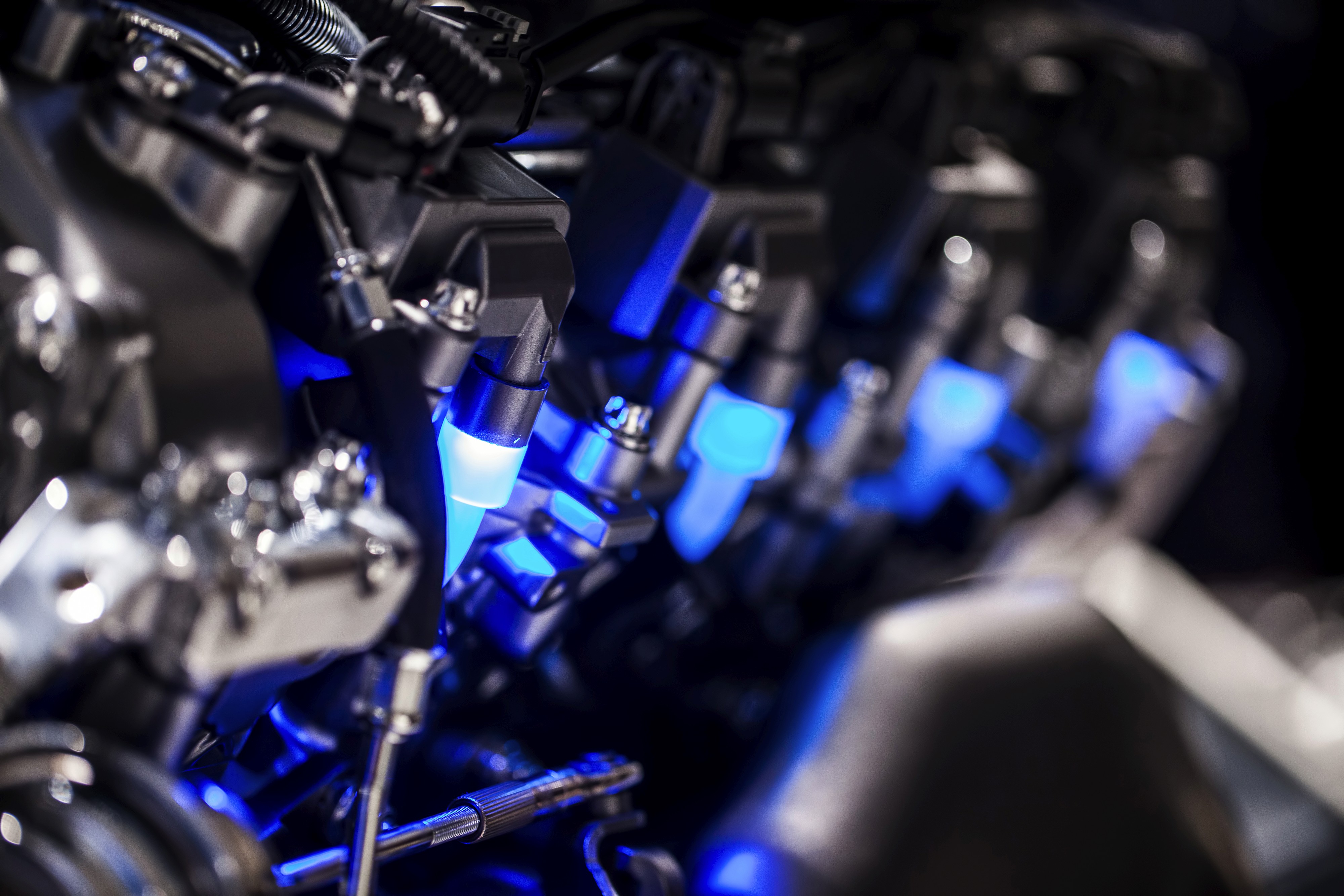
Development and testing of hydrogen injection in ultra-lean combustion systems, with experimental and numerical analysis
With the goal of decarbonizing the vehicle fleet, the use of hydrogen is a promising solution, as it is a carbon-free energy carrier with high calorific power and no CO2 emissions or hydrocarbon emissions in emergency situations.
Its use in compression ignition engines is underdeveloped, and therefore, there is a lack of information regarding combustion in ultra-lean conditions, typical of diesel engines.
Numerous applications use dual-fuel combustion for the easy management of the PFI (port fuel injection) system to be applied in addition to the Common Rail system. This mode presents issues
regarding the management of the maximum flow rate of hydrogen during intake.
For these reasons, a direct hydrogen injection system was chosen to be applied to the cylinder head of a standard engine. In the 1.9-liter GM engine head, mounted on a single-cylinder research engine, the adapter was created to accommodate a commercial injector for direct hydrogen injection up to 100 bar.
During the design phase, simulations identified the assessment of the optimal diameter of the injection system. The adapter with a diameter of 2 mm and a length of 137 mm delivered the hydrogen inside
the cylinder. Two engine speeds and different amounts of hydrogen were tested, and combustion in ultra-lean mode with diesel injection.